Model portfolio services have become one of the great success stories of UK wealth management. On 1 October, MDOTM brought together DFMs, and wealth managers at The Line in London to ask a simple question: if anyone can run a model portfolio, what does it take to run a tailored one at scale?
Graham Dow of NextWealth opened the evening with a data spotlight. He then joined a panel with Ash Weston, Head of MPS at 8AM Global, and Greg Faragher-Thomas, Partner in Asset and Wealth Management at Alpha FMC.
A market that's growing and being squeezed
NextWealth's data shows the opportunity clearly. On-platform discretionary MPS assets have reached £208bn, growing 32% in a year, more than twice the rate of the platform market overall. Tailored models now account for around 14% of MPS assets, and nearly three-quarters of DFMs offer them.
But the price squeeze is real. Average total costs have roughly halved since 2021. Lower-cost and more passive providers are growing fastest, and hybrid propositions are losing ground. Growth and price pressure are arriving together.
What advisers are really asking for
The panel described how demand for tailoring has evolved. It began partly as a branding exercise, with advisers wanting something that felt like their own. It then became needs-based: client circumstances that a standard model couldn't accommodate, such as restrictions on holding particular providers.
Today the driver is structural. As the advice market consolidates, advice firms are getting bigger, they own the client relationship, and they want to concentrate on financial planning. Outsourcing investment management makes sense, but only if the portfolio reflects the firm's beliefs and the way it serves its clients.
Every advice firm is different and have their own investment approach and philosophy. For the end client, though, what matters is that the portfolio meets their cash-flow needs and that they feel looked after. The panel's warning to anyone launching something new was that advisers change their behaviour when something saves or makes their clients money, and rarely for any other reason.
Finding the value in tailored MPS
The economics were discussed openly. Running an MPS efficiently requires significant investment in systems even with a lean team, and it takes scale before a proposition becomes profitable. For some providers, almost all recent growth has come from tailored models, delivered by repurposing the tools built to run the business efficiently. There was also a view that price has a floor. Below about 10bps, as one panellist put it, providers are "charging Netflix money" for what is really investment oversight.
There is still value to be found: in tax efficiency, ETFs, client outcomes, and a closer look at the transaction costs and slippage that build up across the life cycle of a portfolio.
The operational wall, and the way through it
On technology, the panel was candid about the constraints downstream. Running models across 20 or more platforms creates a heavy reconciliation burden, and platforms vary widely in what they can support. Incumbent platforms were seen as holding the market back. Tokenisation was raised as a possible step change, with the potential for a single trade to settle across all platforms.
The more encouraging discussion was about what happens upstream, in the investment process itself. Automating risk-budget rules, rebalancing and drift monitoring allows tailoring to run at scale. Model management is also becoming more important within wealth and asset managers' operating models: rebalancing funds, models and MPS at the same time without favouring one set of clients over another. This is a part of the value chain the large enterprise platforms have not served well.
The direction of travel may be less "hyper-personalisation" and more "hyper-customisation". An advice firm would align its investment approach to segments of its client base, and the models would be assigned and maintained systematically.
The most ambitious vision from the evening was an MPS proposition so seamless that nobody talks about it, because there's no friction left to talk about.
Looking ahead
Asked what a winning MPS proposition looks like in five years, the panel described one that is digital, instant and well governed. Personalisation would be delivered economically at scale through data, with deeper customisation for those who need it. It's a demanding vision, and it relies on scaling the investment process, not only on distributing the end portfolios.
At MDOTM, this is the challenge we focus on: helping investment teams deliver personalised portfolios, and the reporting that goes with them, without losing control or oversight.
Our thanks to Graham, Ash and Greg for a candid and genuinely useful discussion, to Alpha FMC, our event partner, and to everyone who joined us.
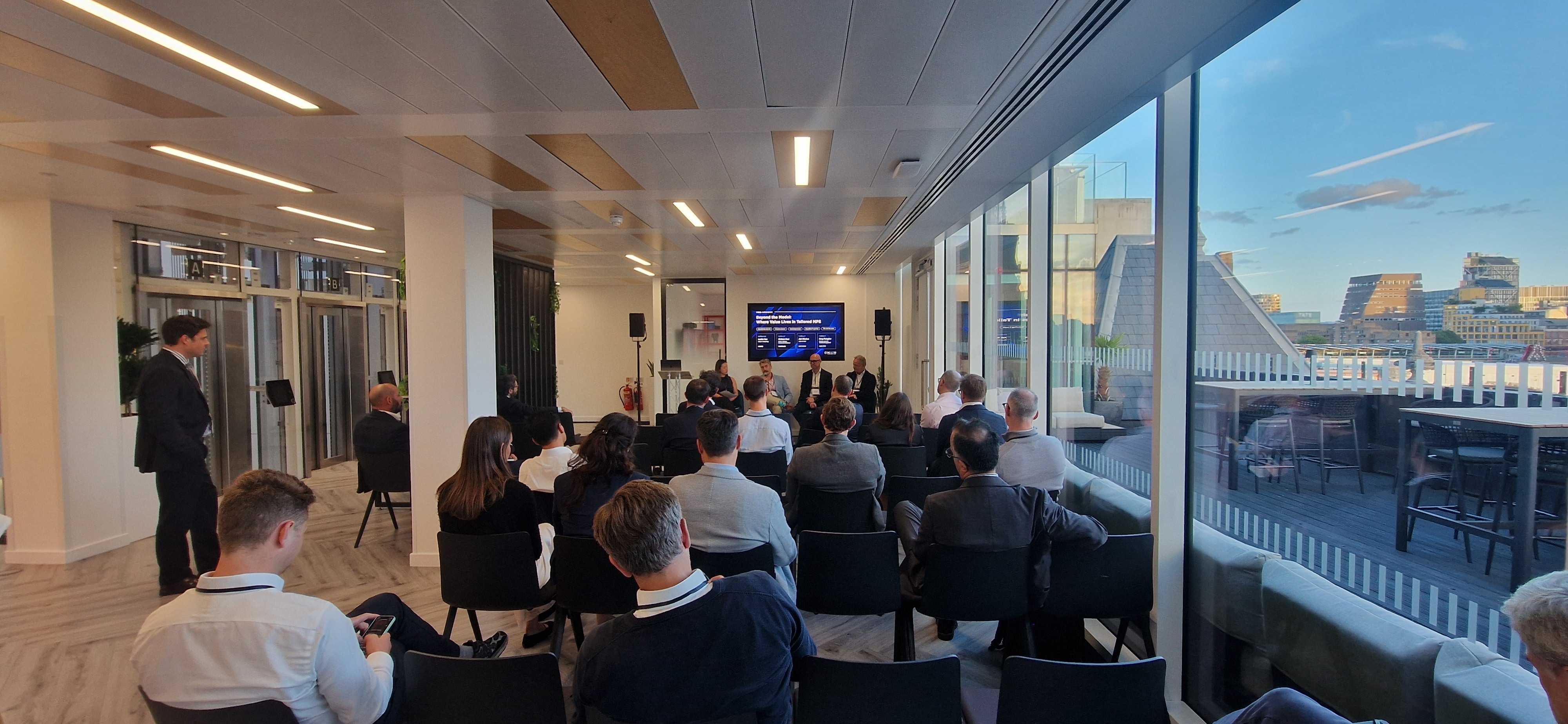
Panellists: Graham Dow, Senior Adviser, Investment Solutions, NextWealth
Ash Weston, Head of MPS, 8AM Global
Bradley Northrop, Senior Partner, Wealth Management, Alpha FMC


.jpg)


%20(2).png)